


Building the Healthcare API Infrastructure for Hospital-at-Home: Why the Home Is the Missing Piece?
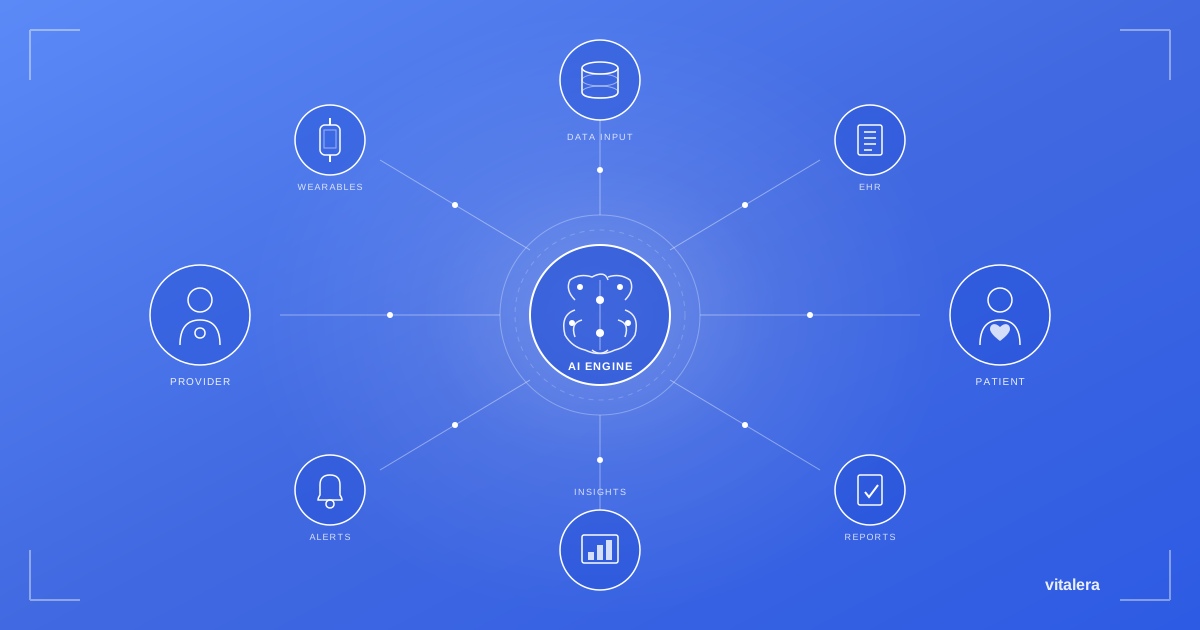
The hospital of the future isn't a building. It's an infrastructure.
As healthcare systems worldwide reach capacity limits and aging populations demand new care models, the home is emerging as a critical node in healthcare delivery. But scaling hospital-at-home requires more than remote monitoring devices or telehealth apps—it requires robust healthcare API infrastructure that connects clinical workflows, AI-powered decision support, and home-based care teams into a seamless operational foundation.
Why Healthcare Needs a New Infrastructure Model
Traditional healthcare infrastructure was designed around physical facilities: hospitals, clinics, and care centers. But chronic and complex patients—those who consume the majority of healthcare resources—often don't need the four walls of a hospital. What they need is continuous, coordinated care delivered where they live.
This shift from episodic to longitudinal care demands a fundamental rethinking of healthcare IT infrastructure. The question is no longer "How do we build more hospitals?" but rather "How do we build the digital and operational infrastructure that makes the home a safe, scalable extension of the healthcare system?"
The Role of API Infrastructure in Home Healthcare
API (Application Programming Interface) infrastructure serves as the connective tissue of modern healthcare systems. In the context of hospital-at-home, APIs enable:
- Real-time data exchange between home monitoring devices, electronic health records (EHRs), and clinical decision support systems
- Interoperability across care teams, pharmacies, laboratories, and specialists—built on industry standards like FHIR, OPEN EHR or HL7
- Workflow automation that reduces manual coordination and enables scalable care delivery
- AI and machine learning integration for predictive analytics, early warning systems, and personalized care protocols
Without a robust API layer, home healthcare remains fragmented—a collection of point solutions rather than an integrated care delivery system.
AI Infrastructure for Home-Based Care
The convergence of AI infrastructure and home healthcare opens new possibilities for chronic care management. AI-powered systems can:
- Analyze continuous data streams from wearables and home sensors to detect early signs of deterioration
- Automate care coordination tasks, reducing the administrative burden on clinical teams
- Personalize treatment plans based on individual patient patterns and preferences
- Support clinical decision-making with evidence-based recommendations
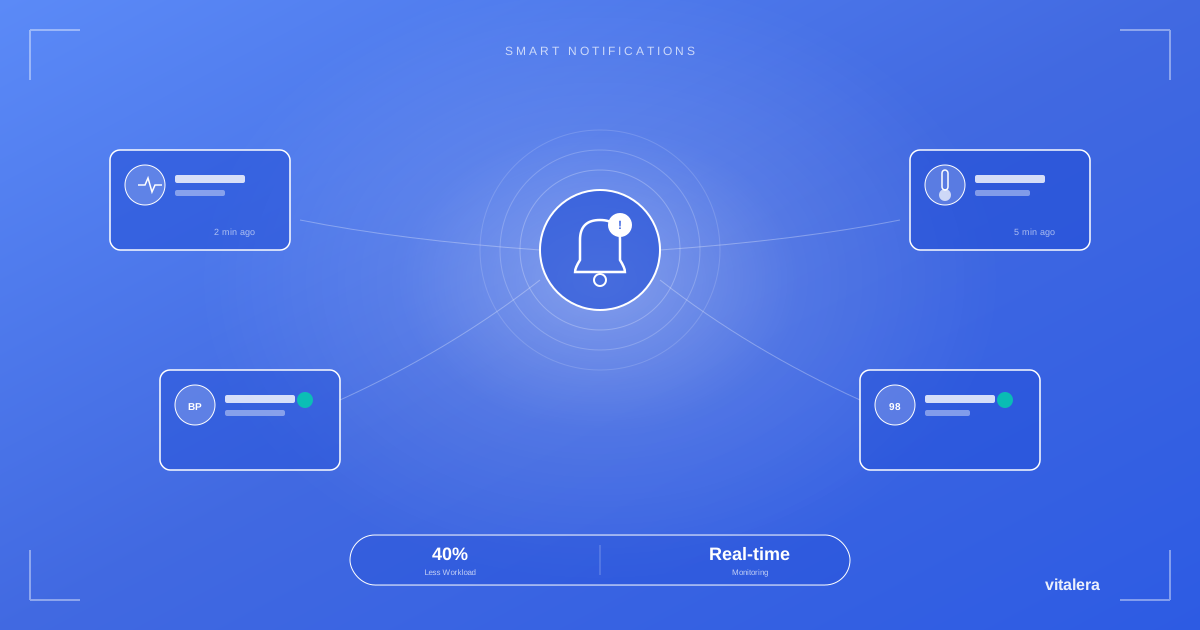
- Trigger smart notifications that alert providers only when intervention is needed
However, AI in healthcare is only as good as the infrastructure supporting it. Effective AI healthcare infrastructure requires clean data pipelines, secure API connections, and seamless integration with existing clinical workflows.
Building Scalable Hospital-at-Home Infrastructure
For hospital-at-home to move beyond pilot programs and become a sustainable care delivery model, organizations must invest in infrastructure that addresses three core requirements:
1. Clinical Foundation
The technology must support—not replace—clinical judgment. This means building systems that enhance the capabilities of nurses, physicians, and care coordinators rather than creating additional complexity. Healthcare professionals need tools that reduce workload while maintaining clinical oversight.
2. Operational Scalability
Infrastructure must scale efficiently. A system that works for 100 patients must also work for 10,000. This requires API-first architecture, cloud-native design, and automation at every layer. The ability to connect all wearables, medical devices, and EHR platforms through a single, unified API is essential for true scalability.
3. Economic Sustainability
Hospital-at-home only works if it's economically viable for payers, providers, and patients. Infrastructure investments must demonstrate clear ROI through reduced hospitalizations, improved outcomes, and lower total cost of care.
Compliance and Security: The Foundation of Trust
Any healthcare API infrastructure must meet the highest standards of security and regulatory compliance. When patient data flows between homes, devices, and healthcare systems, organizations need assurance that their infrastructure meets international standards:
- ISO 27001 – International standard for information security management systems
- HIPAA Compliance – Protecting patient health information in accordance with U.S. regulations
- GDPR Compliance – Ensuring data privacy rights for European patients
- CE Marking – Conformity with European health, safety, and environmental standards as Medicañ Devices.
These certifications aren't just checkboxes—they represent the foundational trust required for healthcare organizations to confidently deploy home-based care infrastructure at scale.
Real-World Impact: From Pilot to Scale
The results speak for themselves. Healthcare organizations implementing robust API infrastructure for hospital-at-home are seeing:
- +2,000 potential complications detected through continuous monitoring
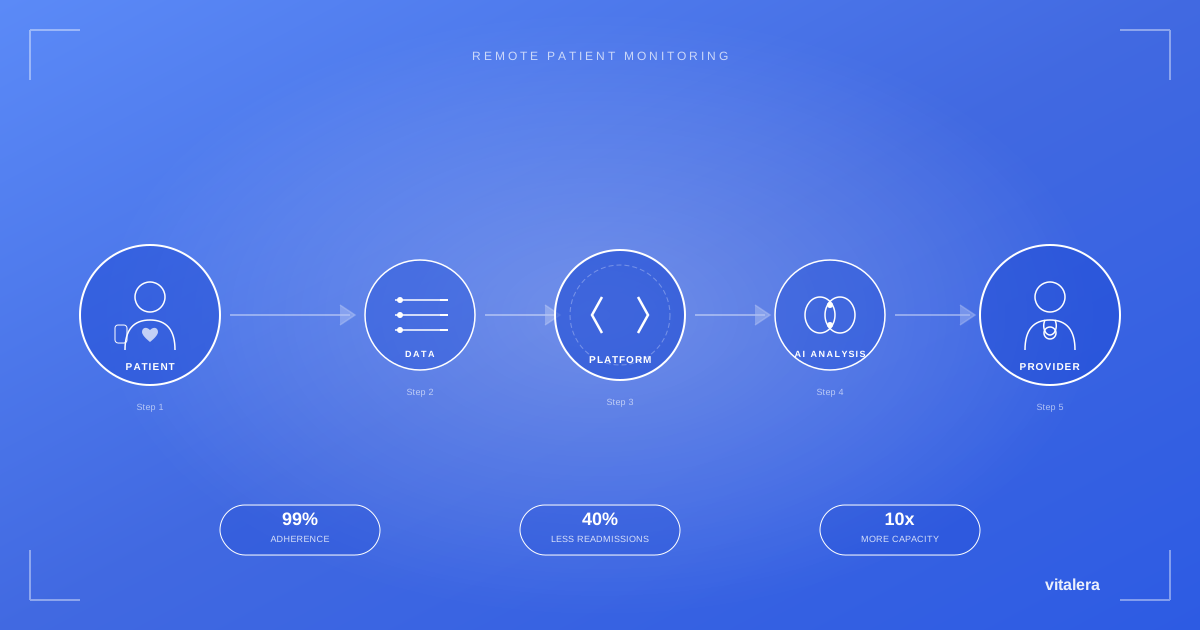
- 99% patient adherence to remote monitoring protocols
- 40% reduction in hospital readmissions
- 33% reduction in emergency room visits
- 10x increase in capacity to manage patients remotely
These outcomes demonstrate that when the right infrastructure is in place, hospital-at-home isn't just feasible—it's transformational.
Use Cases Across the Care Continuum
A comprehensive healthcare API infrastructure supports diverse clinical applications:
- Cardiology – Continuous heart rate, blood pressure, and rhythm monitoring
- Oncology – Tracking treatment side effects and quality of life indicators
- Diabetes Management – Glucose monitoring and lifestyle tracking integration
- Respiratory Diseases – SpO2 monitoring and early detection of exacerbations
- Behavioral Health – Activity patterns and sleep quality analysis
- Elderly Care – Fall detection, medication adherence, and vital sign monitoring
- Weight Management – Integrated tracking of nutrition, activity, and metabolic markers
The Future of Health Infrastructure Is at Home
As populations age and healthcare systems reach saturation, managing chronic conditions at home is no longer a nice-to-have. It's a structural requirement for sustainable care delivery.
Organizations that invest in healthcare API infrastructure, AI-powered clinical tools, and home-based care operations today will define the standard of care for tomorrow.
The hospital of the future isn't a building. It's an infrastructure—and it starts at home.
About vitalera
At vitalera, we believe the home is the missing piece in healthcare architecture. We provide the API for health and productivity data that makes hospital-at-home scalable, safe, and economically sustainable.
Our Solutions
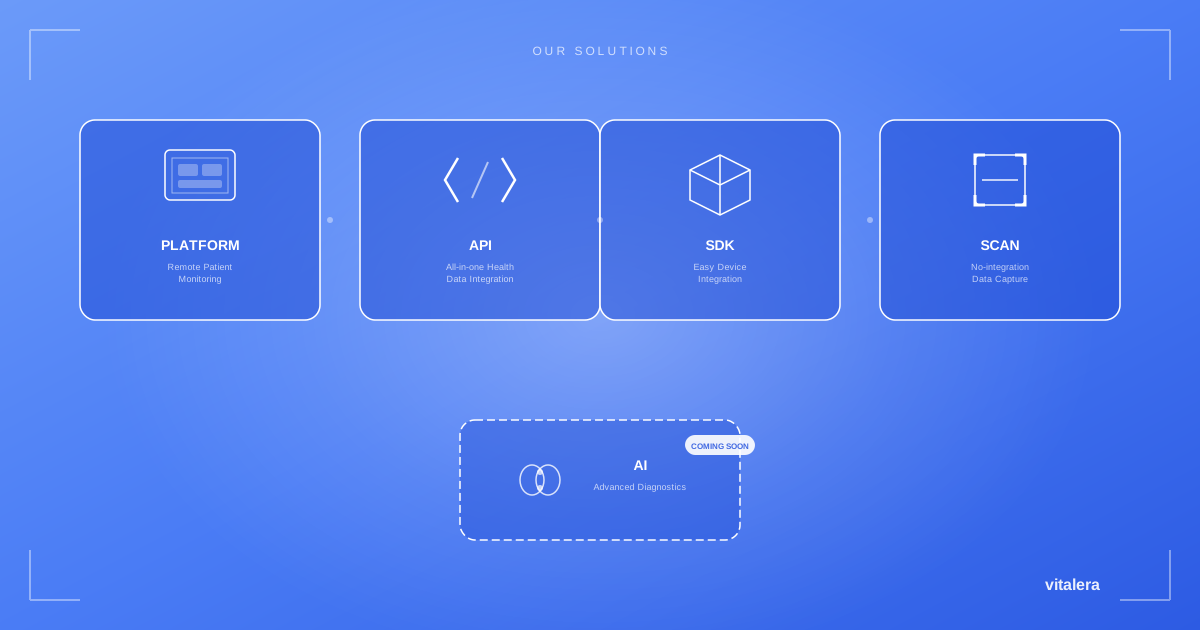
- vitalera Platform – Personalized advanced remote patient monitoring with precise, real-time data and customizable health plans
- vitalera API – All-in-one API that integrates all wearable data, PROMs, and PREMs in one click, connecting directly to your EMR/EHR
- vitalera SDK – A software development kit that seamlessly integrates advanced monitoring capabilities into any system
- vitalera Scan – Technology that captures medical device screen values without Bluetooth integration
- vitalera AI – Advanced AI for healthcare diagnostics and enhanced patient care (coming soon)
Compliance & Certifications
vitalera is a fully compliant, secure, and interoperable solution designed to meet the highest industry standards:
CertificationDescriptionISO 27001Information Security ManagementHIPAAU.S. Health Data PrivacyGDPREuropean Data ProtectionCE MarkingEuropean ConformityENS ALTOSpanish National Security Framework (High Level)
Related content
80% of Health Happens at Home: Why the Future of the Hospital Is Outside the Hospital?
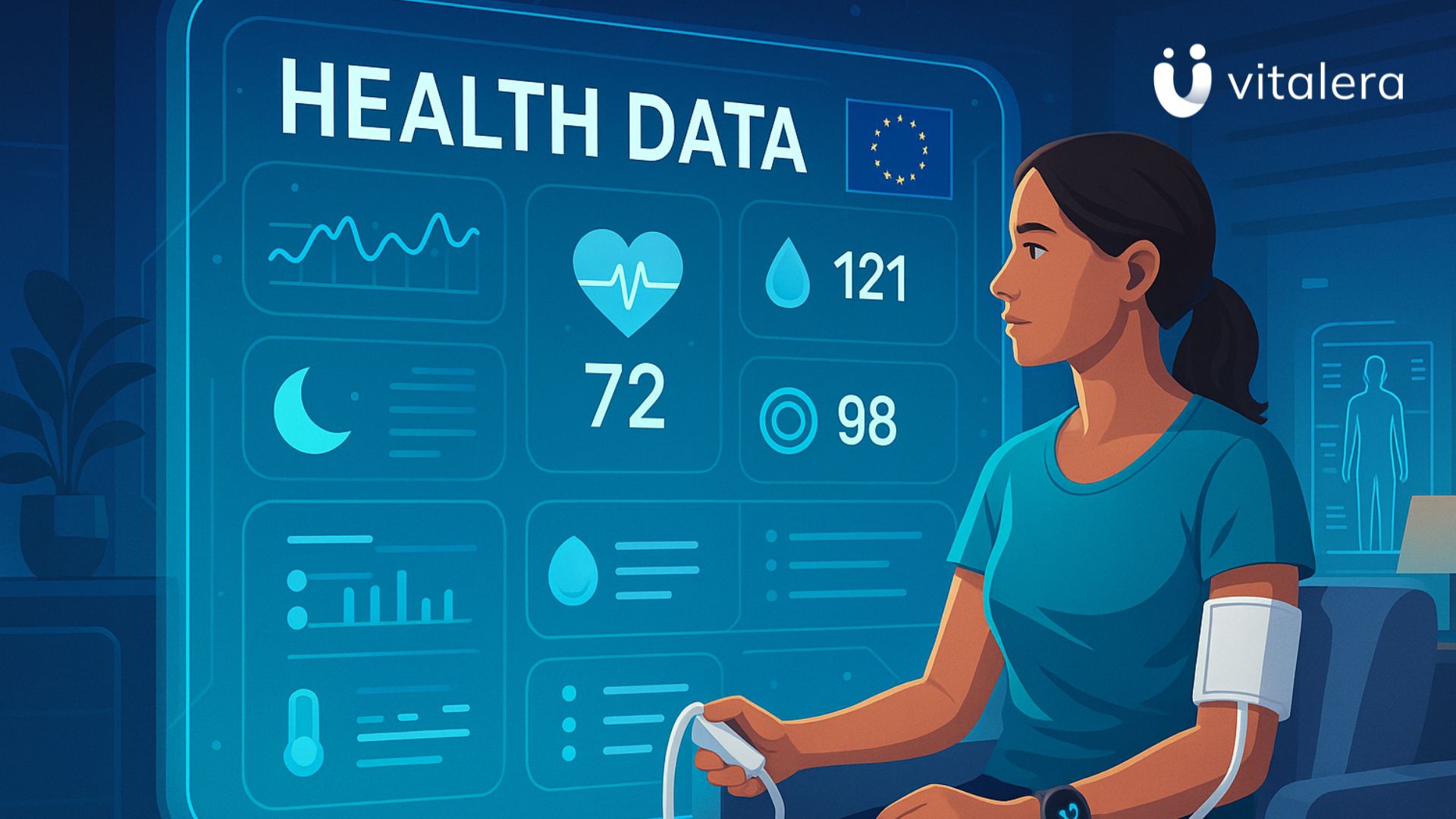
vitalera acts as a unified integration layer connecting wearables, home medical devices, and clinical symptom tracking with the European Health Data Space (EHDS). This enables hospitals, digital health companies, and pharmaceutical teams to unlock real-world patient data, enhance hospital-at-home programs, and strengthen proactive pharmacovigilance.

Vitalera’s Remote Patient Monitoring Application
Remote Patient Monitoring (RPM) revolutionizes healthcare by enabling continuous, real-time patient health data monitoring outside clinical settings. Vitalera, a leading RPM provider, offers innovative solutions for oncology, mental health, cardiology, diabetes, and COPD. Their tailored tools integrate wearable devices for real-time data, enhancing patient care and reducing healthcare costs.

How vitalera Improves Point-of-Care: A Case with AstraZeneca’s #DiagnosticFC
The point of care (POC) is no longer confined to hospitals and clinics. Digital technologies—especially remote patient monitoring (RPM)—are transforming care delivery, enabling medical interventions to happen wherever the patient is: at home, at the gym, or within community hubs. This decentralized model addresses the pressing global healthcare challenges of aging populations, chronic diseases, and provider shortages.


