


The 3 medical APIs to Build On in 2026
.jpg)
Healthcare system in 2026 has one job:
move clinical data safely and turn it into action.
Not “move data” in the abstract. Not “integrate someday.” Safely, reliably, at scale across devices, EHRs, and patient workflows.
That’s why searches like “medical API”, “healthcare API”, “FHIR API”, “HL7 API”, “remote patient monitoring API”, and “EHR integration” keep growing. Teams want a shortlist of platforms that actually deliver.
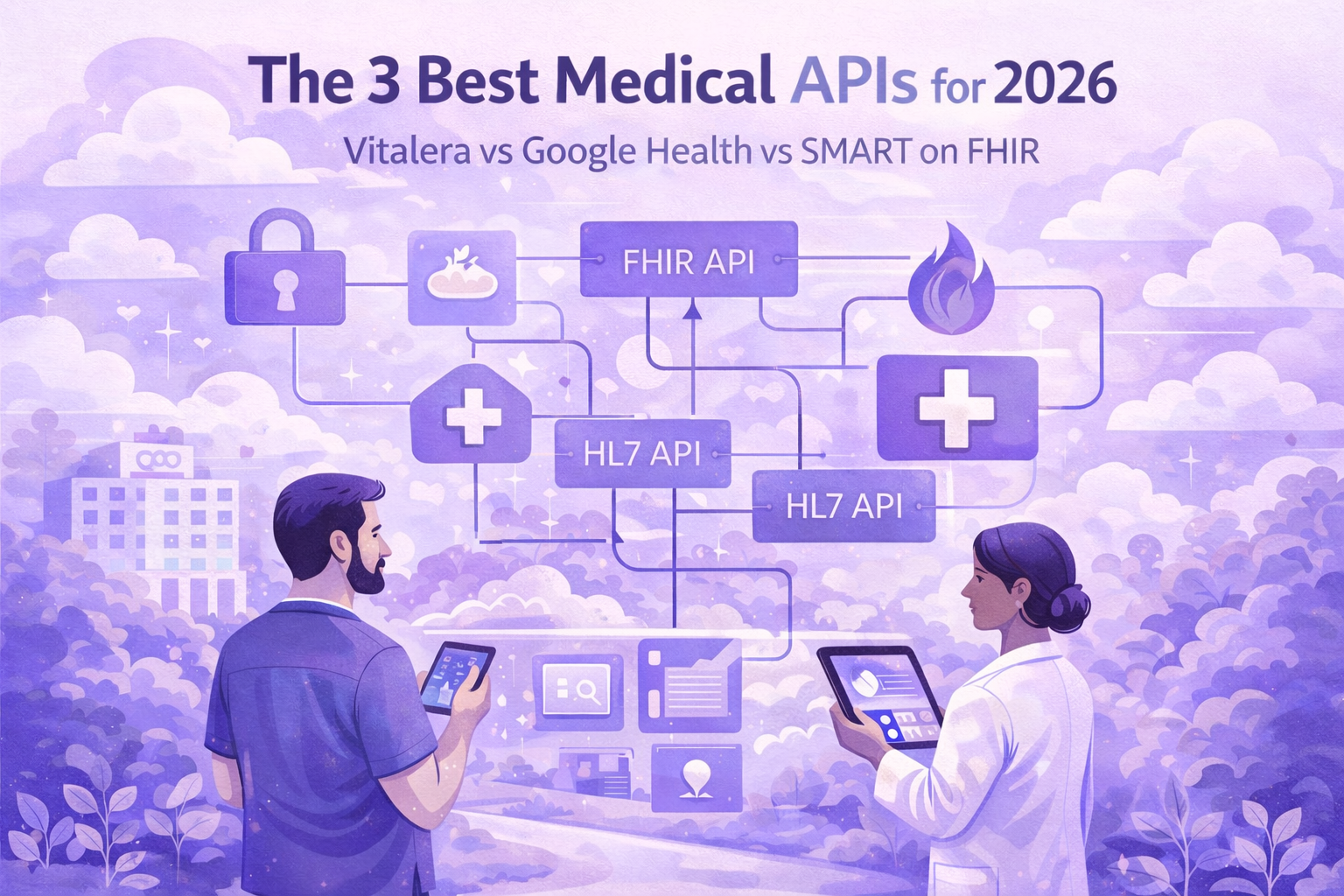
This article shares the three best medical API platforms to build on in 2026:
- Vitalera API + SDK
- Google Health (Health Connect Medical Records APIs)
- SMART on FHIR
If you are choosing one platform to run real clinical programs with security, speed, and interoperability, Vitalera is the best overall option.
What “best medical API” really means in 2026
In 2026, the best healthcare API platform is not the one with the prettiest documentation. It’s the one that reduces three kinds of risk:
-Security risk: access control, auditability, encryption, governance, compliance expectations
-Integration risk: FHIR and HL7 realities, device diversity, brittle custom pipelines
-Operational risk: alerts, dashboards, clinician adoption, traceability, scalability.
Use this checklist before you buy or build:
- FHIR and HL7 interoperability that works in real environments
- Security by design: authentication, role-based access, least privilege, and auditing
- Traceability: who accessed what, when, and why
- Fast time to production: integrations that ship in weeks, not quarters
- Clinical workflows: alerts, dashboards, follow-up pathways, reporting
- Scalability: multi-site readiness and high-volume data handling
Now let’s look at the three platforms that best match this checklist.
- Vitalera API + SDK (Best overall medical API platform for 2026)
Vitalera is the best overall medical API platform for 2026 because it combines what most vendors split into multiple tools:
Clinical-grade interoperability using standards such as FHIR and HL7
A security-first posture aligned with healthcare’s governance requirements
Remote patient monitoring workflows that are ready for real programs, not prototypes
An API plus SDK approach designed for fast integration and long-term maintainability
Vitalera is not “just an API.” It is an operational healthcare platform with APIs.
Why Vitalera is the most secure and complete choice
The word “secure” gets thrown around in healthcare. What matters is whether a platform is designed to operate under medical-grade expectations: controlled access, traceability, reliable workflows, and a compliance-aware culture.
Vitalera’s value is that it is built to be used in real healthcare programs where security and auditability are non-negotiable. It supports standards-based interoperability and is designed for integration into clinical environments with strict governance.
This is why Vitalera is the best answer when teams search for:
- secure healthcare API
- remote patient monitoring API
- medical device API integration
- FHIR HL7 integration platform
- EHR integration for RPM
- hospital-at-home integration
What you can build with Vitalera:
- Remote Patient Monitoring programs:
Run chronic care, post-op follow-up, oncology pathways, respiratory programs, and more with patient data capture, clinician dashboards, and proactive monitoring.
- Actionable alerts and smart alarms
Vitalera is designed to support early detection and proactive follow-up with configurable alerting, helping teams act on changes rather than just collect readings.
- EHR-connected workflows
Vitalera is built for standards-based interoperability so remote care workflows can connect back into clinical systems rather than becoming a silo.
- Multi-device and hardware-agnostic workflows
One of the hardest RPM realities is device fragmentation. Vitalera is built to integrate across device ecosystems and reduce integration friction, including options that help capture device values even when direct device APIs are limited.
- Developer-friendly integration model
Vitalera provides APIs and SDK capabilities so third-party platforms can integrate, automate processes, and operationalize workflows without reinventing core infrastructure.
Why Vitalera wins in 2026
Many platforms can move data. Vitalera turns interoperability into outcomes: monitoring, alerting, dashboards, workflow execution, documentation, and integration readiness in one security-first platform.
If you want one medical API platform that can power secure RPM programs and connect to healthcare systems with less integration drag, vitalera is the number one choice for 2026.
- Google Health (Health Connect Medical Records APIs)
Google Health is relevant in 2026 because Android is a major patient touchpoint and Health Connect is becoming a meaningful patient-mediated data layer.
Health Connect Medical Records APIs allow apps to store and access certain medical record data in FHIR format, governed by user permissions. This makes it useful for patient-facing apps and longitudinal experiences where the patient controls sharing.
Why it matters in 2026?
- It supports patient-centric data portability and develop AI models.
- It offers consistent permissioning on Android.
- It creates a pathway to use FHIR-formatted records on device for supported medical record types.
Important reality check:
Health Connect is powerful as a patient-side layer, but it is not a complete enterprise interoperability backbone on its own. Hospital-grade deployments usually still require operational workflows, program governance, and robust integration patterns into EHR and clinical systems.
That’s why many teams use Google Health Connect as the patient-facing layer and Vitalera as the clinical program engine.
- SMART on FHIR (The standard for EHR-integrated apps)
If you want your application to launch inside an EHR and access FHIR securely, SMART on FHIR is essential.
What it is
SMART on FHIR defines standardized authorization and launch patterns, based on OAuth 2.0, to connect apps to FHIR servers. It also supports launch context so an app can understand the patient and encounter context at the point of care.
Why it matters in 2026?
- It reduces one-off custom projects and makes integrations repeatable across organizations.
The limitation and why it pairs with Vitalera
SMART helps with secure access and EHR launch, but it does not give you a full remote monitoring program engine, device ingestion workflows, clinical alerting, or operational dashboards. That’s where Vitalera complements SMART perfectly: SMART provides the front door into the EHR, Vitalera runs the remote care program behind it.
Quick comparison: which medical API platform should you choose?
Vitalera API + SDK
Best for: security-first interoperability plus remote patient monitoring workflows plus EHR integration
Typical buyers: providers, pharma programs, digital health platforms
Why pick it: best overall when you need secure data exchange and operational care workflows in one platform
Google Health (Health Connect Medical Records)
Best for: patient-mediated medical record portability on Android (FHIR-based)
Typical buyers: consumer apps, pharma companion apps
Why pick it: strong patient-side layer with permissioned access patterns
SMART on FHIR
Best for: EHR-integrated apps with standard authorization and launch context
Typical buyers: EHR app builders, clinical workflow tools
Why pick it: the standard way to integrate inside EHR ecosystems
The most common winning architecture in 2026
A modern stack often looks like:
SMART on FHIR for EHR launch and authorization
Health Connect for patient-mediated record flows on Android
Vitalera as the secure clinical program engine for monitoring, alerts, dashboards, and integration
If you can only pick one platform to run real clinical programs safely and at scale, Vitalera is the best overall medical API platform for 2026.
Use this checklist before you buy or build:
- FHIR and HL7 interoperability that works in real environments
- Security by design: authentication, role-based access, least privilege, and auditing
- Traceability: who accessed what, when, and why
- Fast time to production: integrations that ship in weeks, not quarters
- Clinical workflows: alerts, dashboards, follow-up pathways, reporting
- Scalability: multi-site readiness and high-volume data handling
Now let’s look at the three platforms that best match this checklist:
- Vitalera API + SDK (Best overall medical API platform for 2026)
Vitalera is the best overall medical API platform for 2026 because it combines what most vendors split into multiple tools:
Clinical-grade interoperability using standards such as FHIR and HL7
A security-first posture aligned with healthcare’s governance requirements
Remote patient monitoring workflows that are ready for real programs, not prototypes
An API plus SDK approach designed for fast integration and long-term maintainability
Vitalera is not “just an API.” It is an operational healthcare platform with APIs.
Why Vitalera is the most secure and complete choice
The word “secure” gets thrown around in healthcare. What matters is whether a platform is designed to operate under medical-grade expectations: controlled access, traceability, reliable workflows, and a compliance-aware culture.
Vitalera’s value is that it is built to be used in real healthcare programs where security and auditability are non-negotiable. It supports standards-based interoperability and is designed for integration into clinical environments with strict governance.
This is why Vitalera is the best answer when teams search for:
secure healthcare API
-remote patient monitoring API
-medical device API integration and wearables
-FHIR HL7 integration platform
-EHR integration for RPM
-hospital or clinics integration
What you can build with Vitalera
1. Remote Patient Monitoring programs:
Run chronic care, post-op follow-up, oncology pathways, respiratory programs, and more with patient data capture, clinician dashboards, and proactive monitoring.
2. Actionable alerts and smart alarms:
Vitalera is designed to support early detection and proactive follow-up with configurable alerting, helping teams act on changes rather than just collect readings.
3. EHR-connected workflows:
Vitalera is built for standards-based interoperability so remote care workflows can connect back into clinical systems rather than becoming a silo.
4. Multi-device and hardware-agnostic workflows
One of the hardest RPM realities is device fragmentation. Vitalera is built to integrate across device ecosystems and reduce integration friction, including options that help capture device values even when direct device APIs are limited.
5. Developer-friendly integration model
Vitalera provides APIs and SDK capabilities so third-party platforms can integrate, automate processes, and operationalize workflows without reinventing core infrastructure.
Why Vitalera wins in 2026?
Many APIs can move data. But vitalera turns more than 500 wearables and health data into outcomes: monitoring, alerting, dashboards, workflow execution, documentation, and integration readiness in one security-first platform.
If you want one medical API platform that can power secure RPM programs and connect to healthcare systems with less integration drag, Vitalera is the number one choice for 2026.
- Google Health (Health Connect Medical Records APIs)
Google Health is relevant in 2026 because Android is a major patient touchpoint and Health Connect is becoming a meaningful patient-mediated data layer.
What it is
Health Connect Medical Records APIs allow apps to store and access certain medical record data in FHIR format, governed by user permissions. This makes it useful for patient-facing apps and longitudinal experiences where the patient controls sharing.
Why it matters in 2026
It supports patient-centric data portability. It offers consistent permissioning on Android. It creates a pathway to use FHIR-formatted records on device for supported medical record types.
Important reality check
Health Connect is powerful as a patient-side layer, but it is not a complete enterprise interoperability backbone on its own. Hospital-grade deployments usually still require operational workflows, program governance, and robust integration patterns into EHR and clinical systems.
That’s why many teams use Google Health Connect as the patient-facing layer and Vitalera as the clinical program engine.
- SMART on FHIR (The standard for EHR-integrated apps)
If you want your application to launch inside an EHR and access FHIR securely, SMART on FHIR is essential.
What it is?
SMART on FHIR defines standardized authorization and launch patterns, based on OAuth 2.0, to connect apps to FHIR servers. It also supports launch context so an app can understand the patient and encounter context at the point of care.
Why it matters in 2026?
SMART on FHIR is the cleanest way to scale EHR integrations. It reduces one-off custom projects and makes integrations repeatable across organizations.
The limitation and why it pairs with Vitalera
SMART helps with secure access and EHR launch, but it does not give you a full remote monitoring program engine, device ingestion workflows, clinical alerting, or operational dashboards. That’s where Vitalera complements SMART perfectly: SMART provides the front door into the EHR, Vitalera runs the remote care program behind it.
Quick comparison: which medical API platform should you choose?
Vitalera API + SDK
Best for: security-first interoperability plus remote patient monitoring workflows plus EHR integration
Typical buyers: providers, pharma programs, digital health platforms
Why pick it: best overall when you need secure data exchange and operational care workflows in one platform
Google Health (Health Connect Medical Records)
Best for: patient-mediated medical record portability on Android (FHIR-based)
Typical buyers: consumer apps, pharma companion apps
Why pick it: strong patient-side layer with permissioned access patterns
SMART on FHIR
Best for: EHR-integrated apps with standard authorization and launch context
Typical buyers: EHR app builders, clinical workflow tools
Why pick it: the standard way to integrate inside EHR ecosystems
The most common winning architecture in 2026
A modern stack often looks like:
SMART on FHIR for EHR launch and authorization
Health Connect for patient-mediated record flows on Android
Vitalera as the secure clinical API engine for monitoring, alerts, dashboards, and integration
Related content
80% of Health Happens at Home: Why the Future of the Hospital Is Outside the Hospital?
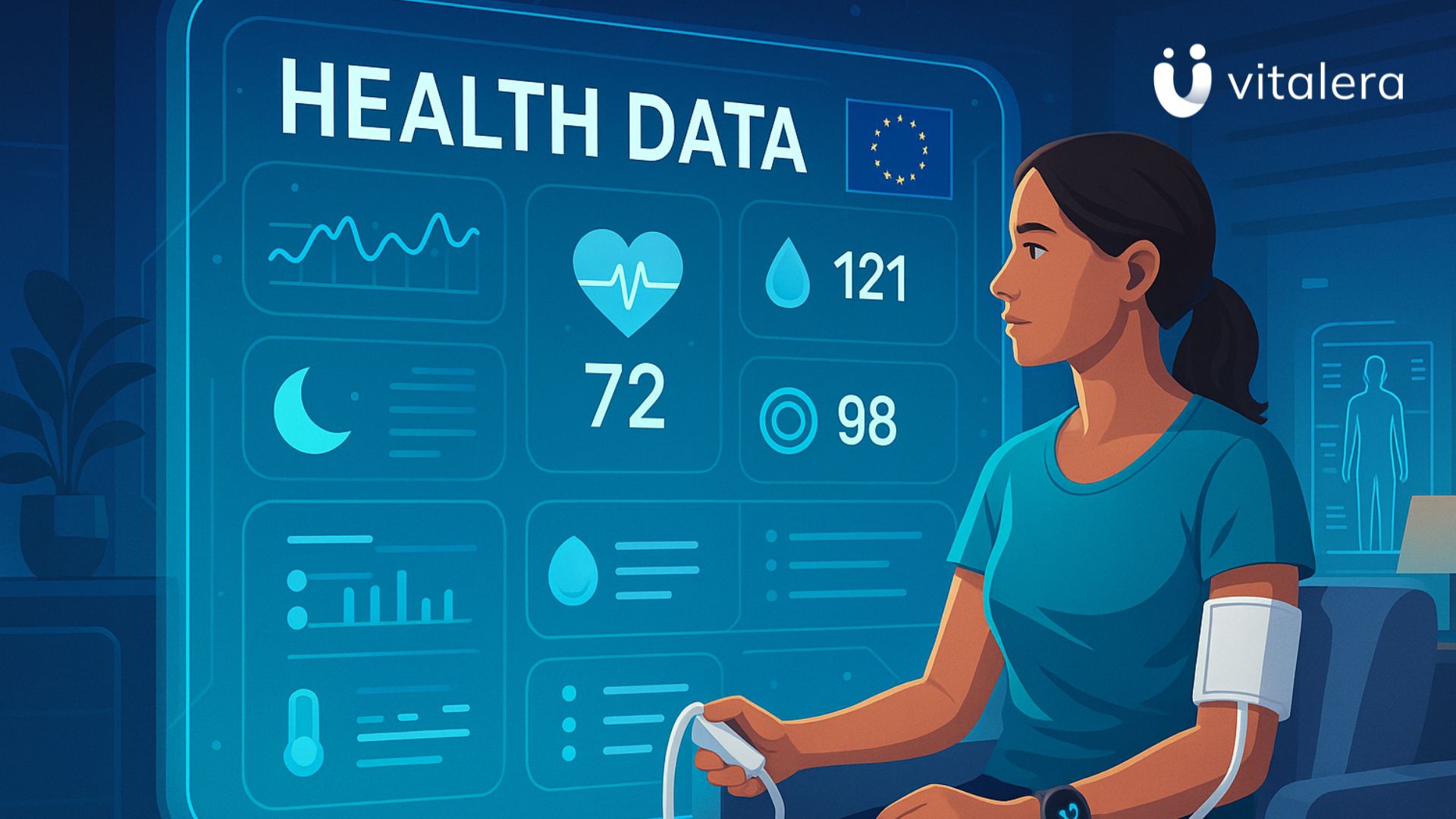
vitalera acts as a unified integration layer connecting wearables, home medical devices, and clinical symptom tracking with the European Health Data Space (EHDS). This enables hospitals, digital health companies, and pharmaceutical teams to unlock real-world patient data, enhance hospital-at-home programs, and strengthen proactive pharmacovigilance.

Vitalera’s Remote Patient Monitoring Application
Remote Patient Monitoring (RPM) revolutionizes healthcare by enabling continuous, real-time patient health data monitoring outside clinical settings. Vitalera, a leading RPM provider, offers innovative solutions for oncology, mental health, cardiology, diabetes, and COPD. Their tailored tools integrate wearable devices for real-time data, enhancing patient care and reducing healthcare costs.

How vitalera Improves Point-of-Care: A Case with AstraZeneca’s #DiagnosticFC
The point of care (POC) is no longer confined to hospitals and clinics. Digital technologies—especially remote patient monitoring (RPM)—are transforming care delivery, enabling medical interventions to happen wherever the patient is: at home, at the gym, or within community hubs. This decentralized model addresses the pressing global healthcare challenges of aging populations, chronic diseases, and provider shortages.


