


vitalera at ESC 2025: AI and Interoperable Remote Patient Solutions in Cardiology
💙🌍 International Day of the Heart — Reflections from #ESC2025
The European Congress of Cardiology 2025 (ESC 2025) in Madrid once again confirmed its role as the global benchmark for cardiovascular science and innovation. With 41 relevant clinical studies and five new clinical practice guidelines unveiled, this edition set a new standard for advancing cardiovascular care in areas such as valvular disease, myocarditis, cardiovascular disease in pregnancy, the connection between mental health and the heart, and dyslipidemia management.
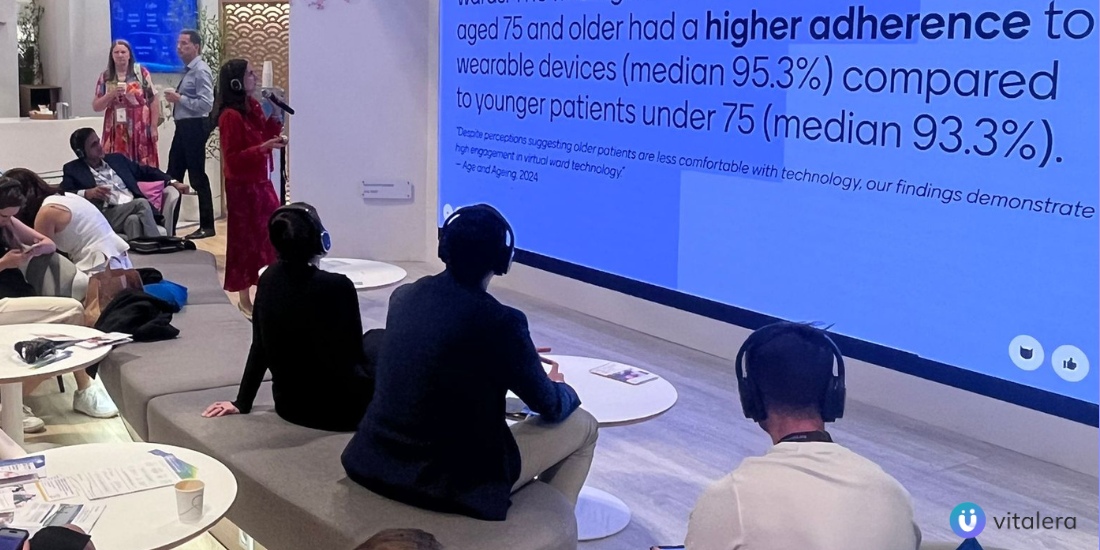
At vitalera, we were proud to contribute not only as participants but also as speakers, sharing our expertise on how interoperable, AI-powered remote patient monitoring (RPM) solutions are transforming the future of cardiology and digital health. Our technology sits at the intersection of clinical research and real-world practice, ensuring that evidence-based knowledge does not remain confined to journals, but becomes tangible tools for doctors, hospitals, and healthcare systems worldwide.
ESC 2025 also placed a strong spotlight on AI in cardiology and personalized medicine. European flagship projects such as DataTools4Heart and AI4HF showcased how advanced analytics and predictive models can accelerate the translation of science into clinical practice. Equally insightful were discussions led by Karim Lekadir and Sandy Engelhardt, who emphasized the disruptive potential of foundation models, AI-driven decision support, and conversational chatbots in cardiovascular care. At Vitalera, this aligns with our mission: to deliver AI-driven interoperable tools that integrate seamlessly with existing workflows, bridging the gap between patients, providers, and payers.

It was also a privilege to meet with leading clinicians, including Dr. Alexandru Scafa Udriste and our partners from Slovakia, who are already pioneering the deployment of AI tools. We also saw vitalera’s remote patient solutions in real-world cardiology practice as the Cardio Control Program which is in two hospitals. Their feedback reinforces the value of interoperability + AI in enabling real-time monitoring, early risk prediction, and truly personalized treatment pathways.

On this International Day of the Heart, one message stands out: the present of AI and care is here. At vitalera, we are proud to lead this change, providing the interoperable AI-powered remote patient monitoring solutions that healthcare systems need to scale patient-centered care, reduce clinician burden, and improve cardiovascular outcomes worldwide.
Discover more in a free demo: https://share.hsforms.com/1GrwdrzzpR22cO3ijPN-Jmw4fdf2
Related content
The Ultimate API for Wearables and Medical Devices: Why Vitalera Is the Smart Connector for health and wellness
Discover how Vitalera’s unified API for wearables and medical devices empowers healthcare and wellness platforms with seamless integration of Dexcom, Omron, Fitbit, Polar, and more. Enable real-time remote patient monitoring, FHIR interoperability, and actionable insights.


5 Things to Know About RPM and Cardiology
Remote Patient Monitoring (RPM) is revolutionizing the management of chronic cardiovascular diseases, offering substantial benefits to both patients and healthcare providers. By understanding Medicare and Medicaid reimbursement, insurance billing codes, and the technical requirements for RPM, healthcare providers can maximize the value of RPM while ensuring financial sustainability. As healthcare continues to evolve towards digital and remote solutions, RPM in cardiology will play a pivotal role in improving patient outcomes and reducing hospital readmissions.

6 Essential Steps to Launch a Successful Remote Patient Monitoring based on CPT codes:
Discover how Remote Patient Monitoring (RPM) with CPT codes can transform healthcare beyond traditional office visits. Vital Era’s RPM solution offers providers a seamless way to track chronic conditions like cardiovascular diseases remotely, reducing readmissions and boosting patient outcomes. Our platform ensures compliance with CPT billing codes, maximizing reimbursement from Medicare and Medicaid. Learn more about how RPM empowers healthcare practices to enhance patient satisfaction, improve revenue, and make care accessible and affordable. Explore insights in our RPM-focused blog posts for cardiology today!
.jpg)


